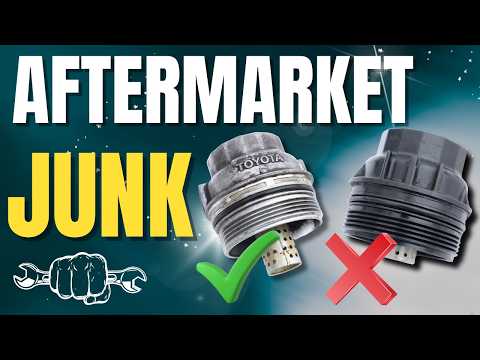
Are cheap Chinese made car parts a disaster or are OEM dealership parts a plain ripoff? In this video, I’ll be discussing the OEM vs. Aftermarket auto parts debate once and for all. Let’s break down when you should splurge on Original Equipment Manufacturer parts and where you can save hundreds with third-party alternatives.
OEM parts are made by the manufacturer to strict materials, tolerances and finishes. The main determination on whether to use an aftermarket part will be its functionality, its labour rate to replace, of course the cost and the availability of the part itself.
Key points covered in this video:
– The real difference between OEM and Aftermarket parts and why they’re cheaper.
– The parts you should always buy OEM, and where you can getaway with going with an aftermarket part for each vehicle subsystem.
– The huge market of used OEM parts at junkyards and part outs are a viable option.
– How to find high-quality aftermarket brands that are actually a better deal than factory parts.
– The truth about how third-party parts affect your factory warranty, and what effect their warranty and box have to do with how much you pay.
Whether you’re a DIY person like me trying to save some cash or paying a mechanic to get your car fixed out of warranty this guide will help you make the right choice for your ride. In general you get what you pay for, but especially for superficial things that don’t have a critical function to the drive-train, aftermarket parts work just fine.
Leave a Comment down below with your experiences with aftermarket parts and if you’ve had great luck with saving some money!
Skip to section:
0:00 – The OEM vs. Aftermarket Dilemma – Introduction
0:08 – What exactly is an OEM part?
0:14 – Categories of why you’d use an aftermarket part
0:28 – Real World Examples: Should we go with OE?
3:14 – Upgraded Aftermarket Parts
3:45 – Fluids and Filters
4:38 – Low Labour Components
6:30 – Getting quality parts for less
7:05 – Part Availability
7:31 – Quality Control Regulation
7:49 – Design Consolidation – Why Aftermarket Parts are Cheaper
8:46 – Final Verdict: Which should you choose?
This is the Camera I use:
(US)
(Canada)
speedkar9 on Instagram and Tiktok
speedkar99 on Facebook and Linkedin:

I will not use aftermarket parts. OEM for my vehicle are made in Japan. High quality. Aftermarket just doesn’t last or fit perfectly. Especially today.
The whole aftermarket parts supply chain is a mess. Sometimes you can identify the OEM suppliers part # and buy the exact model in the aftermarket that’s cheaper. I’ve heard arguments that the same aftermarket part may be a lower QC. However I don’t think it’s realistic because it would be a mess to track for logistics and documentation. If a budget version needed to be created, then it would require a new part/model # and documentation to support it.
There are contract obligations that prevent marketing the same part as aftermarket. Therefore, the manufacturer may have to change the specifications to get around the contract.
I generally try to go OEM for engine, transmission and electrical parts. If too expensive or discontinued, then I’ll research the OEM supplier for that part and see if they sell that same part in the aftermarket.
3:49
To be clear, vehicle manufaturers aren’t themselves making transmission fluid either.
In the case of Subarus, which I’m pretty familiar with, the engine, transmission and differential fluids are all made by Idemitsu.
We need to stop looking at “aftermarket” like it’s a single brand. Some brands are better than others. The OE brand is going to have better parts than some aftermarket brands, but other aftermarket brands might have better parts than the OE brand. The real key is to buy important parts from good brands.
No no no. Vegetable oil turns into a glue. Never suggest that even as a joke because someone will do it. Wait they have.